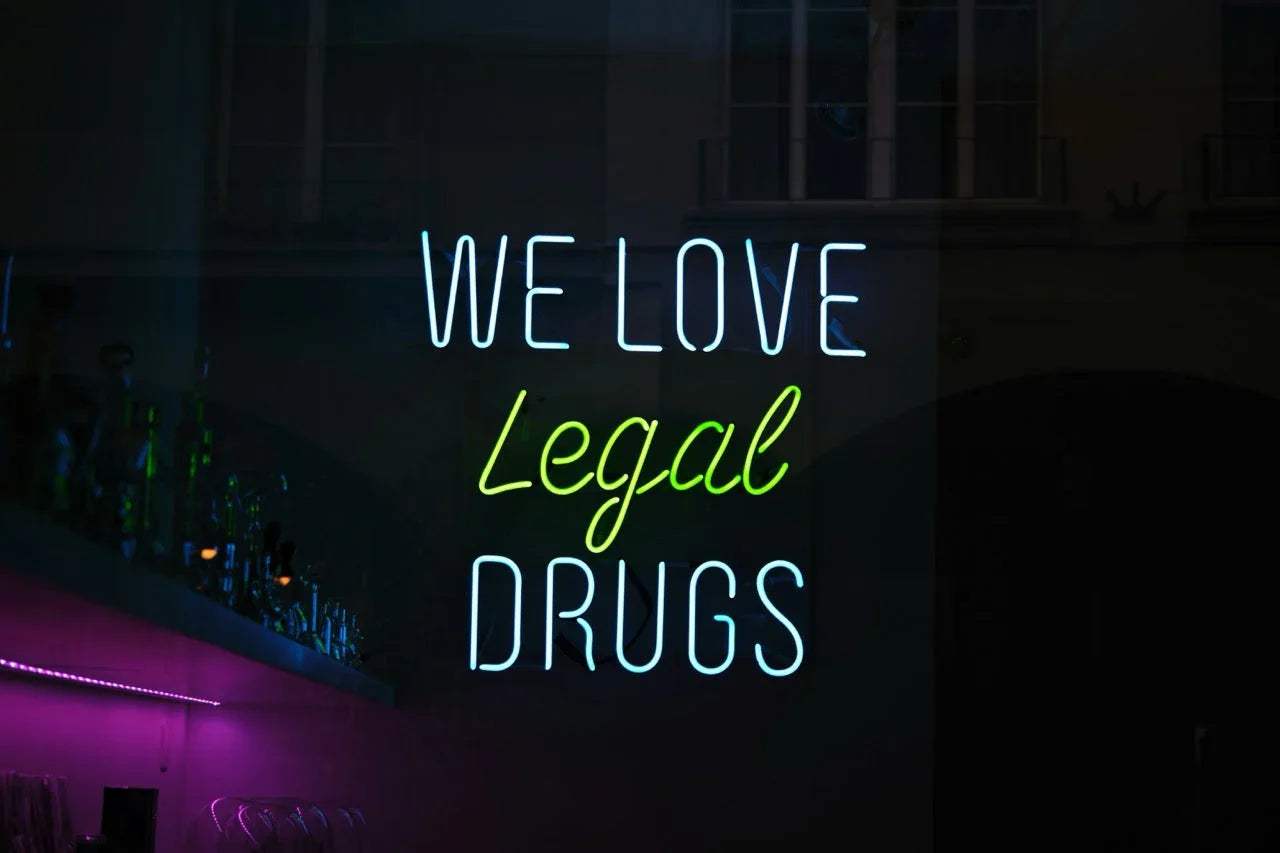
If you Google "effects of legal highs ," you'll find big promises and little asterisks. "Legal," "gentle," "plant-based"—it sounds like wellness. In reality, it's more like mystery meat: It looks like something familiar, might even taste like it, but you don't know what's in it. Here, we separate hype from reality—understandable, relaxed, without horror stories, but honest about the risks. And yes, without any how-to stuff.
- 1. Key Takeaways – “The Effects of Legal Highs” in 8 Clear Points
- 2. What exactly are "legal highs" – and why is the term misleading?
- 3. Which main classes of "legal highs" are discussed – and how do their mechanisms of action differ broadly?
- 4. How does the effect feel – and what factors determine its intensity and course?
- 5. How long do "legal highs" last – and what do the onset, peak, and comedown typically look like for each class?
- 6. What short-term side effects occur frequently – and how can I recognize warning signs?
- 7. What serious risks are documented – and why are some NPS riskier than “classic” substances?
- 8. Do tolerance and dependence develop – and if so, how quickly?
- 9. How dangerous is mixing substances – and which interactions are particularly problematic?
- 10. How do "legal highs" affect driving ability – and what are the risks in road traffic?
- 11. Are “legal highs” detected in drug or workplace tests – and what is legally decisive?
- 12. What is the legal situation regarding "legal highs" – and why do the rules change so often?
- 13. How do I recognize quality and counterfeiting risks – and why are label and contents often two different worlds?
- 14. Which myths about "legal highs" persist – and how can they be debunked quickly and painlessly?
- 15. What legal, low-risk alternatives are there for relaxation, focus, and sleep – without getting "high"?
- 16. How do I stay reliably informed – and filter out rumors?
- 17. FAQ “Effects of Legal Highs” – all in one sentence
- 18. FAQs about the effects of legal highs
- 19. Happyflower moment: Why we say this so clearly
Key Takeaways – “The Effects of Legal Highs” in 8 Clear Points
- "Legal highs" is a marketing term, not a guarantee of safety: The effects vary depending on the class (synthetic cannabinoids , cathinones, tryptamines, dissociatives, "downers"). The fact that something was/is (still) legal says nothing about its safety. Sources: EU Drugs Agency (EUDA), BMG/NpSG.
- Substance groups instead of individual lists: In Germany, the NpSG ( New Psychoactive Substances Act) prohibits, among other things, the acquisition, possession, and distribution of substances based on groups – the situation can change quickly. What is "legal today" may be history tomorrow. HHC, for example, is illegal, while 10-OH-HHC is still legal.
- Effect ≠ Label: Content and potency vary greatly; products sold as " cannabis " may contain synthetic cannabinoids such as HHC – with sometimes massive risks.
- Onset/peak/comedown are crucial: Rapid onsets (e.g., inhalation) increase the risk of overdose; long-lasting after-effects (restlessness, insomnia, low mood) are not uncommon.
- Serious complications have been documented: from cardiovascular events and hyperthermia to psychoses/delirium – especially with synthetic cannabinoids, cathinones, and nitaceous opioids.
- Mixing substances is a multiplier: stimulant + sedative (“push-pull”), alcohol and certain medications significantly increase risks.
- Driving & Tests: Even if rapid tests do not detect every NPS, fitness to drive remains legally central; since 22.8.2024, a THC limit of 3.5 ng/ml applies in Germany – other drugs still fall under § 24a StVG.
- Better plan: If your goal is relaxation/focus/sleep, legal, low-risk routines (breathing exercises, mindfulness, sleep hygiene) work reliably – without legal stress.


What exactly are "legal highs" – and why is the term misleading?
"Legal highs" is not a scientific term, but a marketing ploy. It refers to new psychoactive substances (NPS) , often sold as herbal mixtures, powders, liquids, "research products," or "room odorizers." The problem is:
- "Legal" is temporary: In Germany, the New Psychoactive Substances Act (NpSG) applies, prohibiting groups of substances . This allows authorities to detect new variants more quickly, including acquisition and possession .
- Marketing is not medicine: Dosage, purity, potency, and content vary. What is advertised as "mild" today may be "far too strong" tomorrow.
In short: “Legal Highs” is a label, not a guarantee.
Which main classes of "legal highs" are being discussed – and how do their mechanisms of action differ broadly?
To help you roughly assess the effect, the 5-point grid is useful:
- Synthetic cannabinoids (cannabinoid mimetics): These bind to the CB1/CB2 system, are sometimes much more potent than THC , and have an abrupt onset and unpredictable reactions (cardiovascular effects, anxiety/panic attacks, and seizures have been reported). EUDA lists hundreds of substances in this class.
- Cathinones (stimulant NPS): Related to khat alkaloids; effects: drive, alertness, talkativeness – but also crash , restlessness, insomnia; EU reports mention growing quantities and incidents.
- Tryptamines (psychedelic): Perceptual alteration/“mind stuff”, strongly dependent on set and setting; risks: anxiety, disorientation, rarely serotonin syndrome in combinations. We can recommend our smart shop here.
- Dissociatives (e.g., arylcyclohexylamines): decoupling, body/space distances, motor instability.
- “Downer”-like NPS: Sedation/Anxiolysis; Risk: Respiratory depression (depending on class), rebound effects, dependence dynamics.
The exact receptor physiology is complex; what is important is that the classes differ noticeably – in effect and risk.
How does the effect feel – and what factors determine its intensity and course?
Two words: context and body .
- Set & Setting: Expectations, mood, surroundings, social vibe – all modulate the experience. A quiet evening ≠ festival chaos.
- Individual factors: sleep, diet, hydration, fitness, pre-existing conditions, medications. The same substance can have a completely different effect on two different days.
- Product variability: Label ≠ contents. Especially with NPS, batch-to-batch is a gamble. EU reports explicitly warn against "cannabis products" that actually contain synthetic cannabinoids .
How long do "legal highs" last – and what do the onset, peak, and comedown typically look like for each class?
Roughly speaking – without a “cookbook”:
- Faster onset (especially inhalation, sublingual liquids): Effect comes on abruptly, peak is rapid – higher risk of overdose .
- Medium/slow onsets (some oral forms): Later, longer, but often more sluggish comedown .
- After-effects : Restlessness, rebound anxiety, irritability, sleep disturbances, low mood – not uncommon, especially with stimulant/cannabinoid NPS.
What short-term side effects occur frequently – and how can I recognize warning signs?
Physically:
- Rapid heartbeat, increased blood pressure, sweating, nausea, trembling
- Headache, dizziness, coordination problems
Psychological:
- Anxiety/panic, confusion, paranoia, sensory overload
- Irritability, mood swings, restlessness
Warning signs: chest pain, collapse, persistent disorientation, hallucinations with misperception of danger, seizures – this is a medical issue. It's not embarrassing, it's health.
What serious risks are documented – and why are some NPS riskier than “classic” substances?
- Cardiovascular system: Arrhythmias, hypertensive crises; synthetic cannabinoids and stimulant NPS are a particular focus of the EU warning systems.
- Hyperthermia/Dehydration: Especially in stimulating settings (heat, dancing, fluid loss).
- Psychosis/Delirium: Reported with high doses/predisposition/combinations.
- Adulteration: Products sold as “cannabis”/“gummy” have actually been associated with potent synthetic cannabinoids – including cluster poisonings.
No panic pitch – just the current situation: The EUDA speaks of new waves of synthetic stimulants/opioids (e.g., nitazene) and semi-synthetic cannabinoids. Dynamic, not static. Reuters
Do tolerance and dependence develop – and if so, how quickly?
- Synthetic cannabinoids: Frequent rapid tolerance, rebound anxiety/sleep problems, craving loops.
- Stimulant NPS (cathinones): Classic cycle of euphoria/crash, redosing, sleep deficit, mood drop – risks of addiction documented.
- "Downer" NPS: Risk of habituation/withdrawal symptoms – to be taken seriously depending on the class (and mixed use).

How dangerous is polydrug use – and which interactions are particularly problematic?
Push-pull combinations (stimulant + sedative) are extremely dangerous: one masks the other until you overdo both. Alcohol distorts risk perception and increases respiratory and cardiac strain. Medications with a QT effect plus NPS? Not a good idea. Most emergencies have multiple contributing factors, not just "one substance."
How do "legal highs" affect driving ability – and what are the risks in road traffic?
- Effects: Longer reaction times, lapses in attention, coordination zigzags – completely incompatible with road traffic.
- Legally: Since August 22, 2024 , a THC limit of 3.5 ng/ml in serum has been in effect for cannabis in Germany (Section 24a of the Road Traffic Act remains applicable). For other drugs, detection of the substance plus impaired driving ability is sufficient for legal action. First-time offenders risk a fine of at least €500, a one-month driving ban, and penalty points. Schlun & Elseven
Are "legal highs" detected in drug or workplace tests – and what is legally decisive?
- Standard panels cannot find every NPS; some require specialized analysis .
- However, a "negative rapid test" offers no protection if you are clearly impaired . Legally, fitness to drive is what counts; furthermore, blood tests can reveal substances/metabolic effects. EU overviews show that countries use mixed models of threshold values and hazardous conditions.
What is the legal situation regarding "legal highs" – and why do the rules change so often?
Since 2016, Germany has used the New Psychoactive Substances Act ( NpSG ): Instead of listing each substance individually, groups of substances are recorded (e.g., synthetic cannabinoids). Acquisition, possession, distribution, manufacture, import/export/transit, and administration are among the prohibited activities. Criminal penalties apply to those handling substances with the intent to distribute them. Changes occur when new chemicals seek loopholes – a "cat and mouse" game.
Your practical filter: If Social/Shop shouts “Legal!”, check § 3 NpSG and the annexes – official wording beats advertising text.
How can I recognize quality and counterfeiting risks – and why are label and contents often two different worlds?
- Mislabeling: Same brand name, different content – it happens.
- Potency fluctuations: Microgram amounts of substances in forms of consumption that appear "mild".
- Adulteration: Products sold as "cannabis" may contain synthetic cannabinoids ; EU reports explicitly warn against this.
Design, holographic stickers and "limited batch" are marketing, not a laboratory.


What myths about "legal highs" persist – and how can they be debunked quickly and painlessly?
- "Legal = safe" – Wrong. The NpSG exists precisely because this logic is flawed.
- “Plant-based = harmless” – nature can be extremely potent; poisonous plants are also “plant-based”.
- “Forums = Evidence” – anecdotes are not controlled data; the EU early warning systems do not exist for no reason.
What legal, low-risk alternatives are there for relaxation, focus, and sleep – without getting "high"?
Simple, but effective, and yes: it works .
- Breathing exercises: Prolonged exhalation (e.g., 4-6 seconds in, 6-8 seconds out) – gradually reduce the duration to minutes.
- Mindfulness in mini-doses: 10–12 minutes of open attention; the mind becomes quieter, the stimulus filter stronger.
- Sleep stack without pills: light in the morning, temperature 18–19 °C, fixed bedtimes.
- Move your body: 20-30 minute walks, light strength training – mood and sleep will benefit.
This is not a "miracle pill", but a reliable setup – zero legal stress, zero "What was in it?" thoughts.
How can I stay reliably informed – and filter out rumors?
- Primary sources: Laws on the Internet (NpSG/BtMG, including annexes) Federal Law Gazette (Publication/Entry into force) EU Drugs Agency (EUDA) : Annual reports, topic overviews, warnings
- Laws on the Internet (NpSG/BtMG, incl. annexes)
- Federal Law Gazette (Publication/Entry into force)
- EU Drugs Agency (EUDA) : Annual reports, topic overviews, warnings
- Methodology: Save permalinks, note date/time, screenshot relevant sections.
- Reality check: If there is no primary source, it's not a fact – just a claim.
FAQ “Effects of Legal Highs” – all in one sentence
What exactly does "Legal Highs" mean – and why is the term problematic?
A marketing label for new psychoactive substances; legally dynamic, not automatically "mild" from a medical perspective.
How do the effects and risks differ for each class?
Massive: synthetic cannabinoids (abrupt, sometimes strong effects), stimulant cathinones (drive/crash), tryptamines (mind/perception), dissociatives (uncoupling), "downers" (sedation).
How long does the effect last – and how unpleasant can the comedown be?
Onset/peak/comedown depend on class and method of consumption; rapid onsets increase risk, after-effects (restlessness, sleep) are common.
Are "legal highs" detected in standard tests?
Not always; some NPS require special analysis – legally, fitness to drive still counts.
What rules apply when driving – and what are the potential consequences?
The legal limit for THC in Germany is 3.5 ng/ml (since 22.08.2024); other drugs remain relevant under § 24a StVG – fine, driving ban, points.
Are there safe alternatives without psychoactive substances?
Yes: Breathwork, mindfulness, sleep hygiene, movement – replicable, legal, zero mystery.


Happyflower moment: Why we say this so clearly
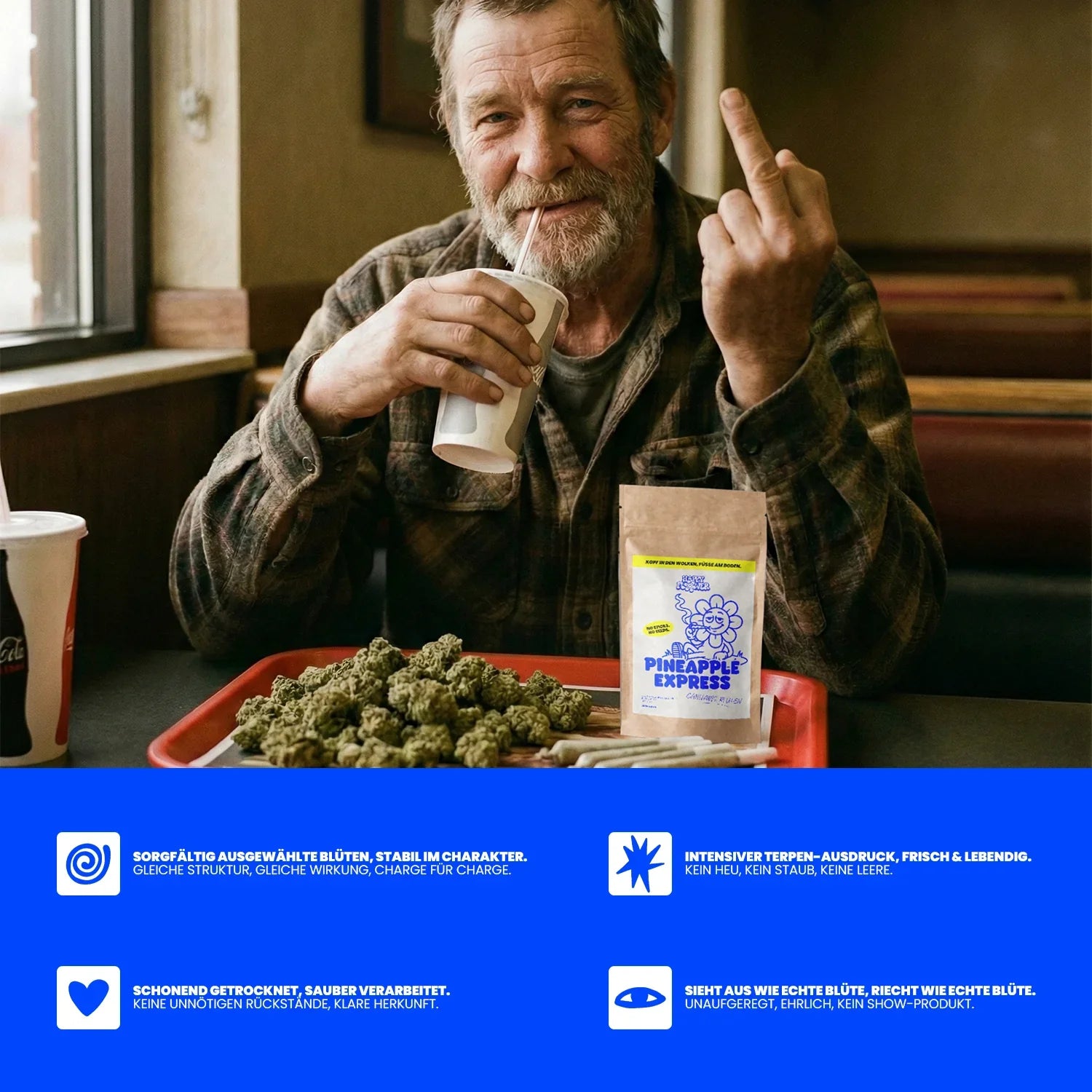
We are Happyflower.io – a cannabis shop, not an alchemy channel. Our style: mature, honest, no-nonsense. We don't sugarcoat things, we speak plainly . If you want products that fit into a relaxed, legal lifestyle, you'll find inspiration with us – no miracle claims, no "legal = safe" games. We value transparency, and you probably do too.




Share:
Iboga: What is Iboga – and why does the plant fascinate and spark debate worldwide?
Are legal highs dangerous – and what does “dangerous” really mean in practice?