You know cannabis , but have you heard of iboga ? – It's somewhere between a documentary, a subreddit, and "a friend of a friend told me about it." It sounds like a life hack, but it feels like a topic that demands respect. Here you'll get the overview without any esoteric jargon or panic – well-founded, understandable, and straightforward.
- 1. Key Takeaways – Iboga in 8 clear points (SEO-compact)
- 2. What exactly is iboga: a plant, root bark, or a collective term for certain alkaloids?
- 3. How do iboga, ibogaine, and noribogaine differ in origin, chemistry, and effect – and why is this distinction important?
- 4. What subjective effects do users report with Iboga – from alertness to visions – and how can these be objectively assessed?
- 5. What mechanisms of action are being discussed (high level), and what could make noribogaine permanently different from ibogaine?
- 6. Which health risks are best documented (e.g., QT prolongation, arrhythmias, liver/electrolytes)?
- 7. Which contraindications are considered critical (heart disease, pre-existing conditions, medication lists)?
- 8. Which interactions with medications or substances are particularly problematic – and why?
- 9. What is Bwiti – and what role does Iboga historically play in Gabon, Cameroon and the Republic of Congo?
- 10. What cultural misunderstandings are circulating online – and how can one recognize respectful, context-sensitive representations?
- 11. What does the evidence say about iboga/ibogaine in cases of addiction – what are the opportunities and limitations?
- 12. What safety standards do clinical settings typically require (screening, monitoring) – and why are they so strict?
- 13. Is Iboga legal in Germany – and how can I reliably verify this (BtMG vs. NpSG, wording of the annexes)?
- 14. How do I find official information (Federal Law Gazette, "Laws on the Internet") and correctly interpret "promulgation" vs. "entry into force"?
- 15. Why does a purchase abroad not protect against German law – and what applies to shipping, transit and travel?
- 16. How can the legal situation regarding iboga/ibogaine be roughly classified in EU neighboring countries, the UK and the USA – and why do states differ so greatly?
- 17. Which sources are suitable for international comparisons – and how do I avoid misinformation from forums/shop blogs?
- 18. What is the status of species conservation, wild populations and cultivation of Tabernanthe iboga – and why is overuse being discussed?
- 19. What ethical questions arise (benefit sharing, fairness towards communities of origin, cultural appropriation)?
- 20. Which “no-gos” are crucial from a safety and evidence perspective (self-experimentation, mixed use, lack of screening)?
- 21. What legal, low-risk alternatives exist for goals such as clarity, relaxation, or reflection (breathwork, mindfulness, therapy formats)?
- 22. Which myths about Iboga are particularly widespread – and how can you debunk them with just a few checks?
- 23. How do I document my source check (permalinks, date, screenshots) so that I can substantiate claims later?
- 24. Why is “Iboga ≠ Ibogaine ≠ Noribogaine” more than just splitting hairs – and what are the practical consequences of this confusion?
- 25. Why is the comparison “like LSD/psilocybin” hardly useful – and what differences are crucial for user decisions?
- 26. Which watch points (Federal Law Gazette, legal portals, systematic reviews) are truly relevant – and how do I set up alerts effectively?
- 27. How do I distinguish between "new" and "valid" – and when is waiting wiser than acting?
- 28. FAQ about Iboga – everything answered in one sentence
- 29. FAQ about Iboga - everything answered in one sentence
- 30. Mini-service for your reality check: How to stay well-informed (without a law degree)
- 31. Where Happyflower.io fits into all of this
Key Takeaways – Iboga in 8 clear points (SEO-compact)
- Understanding Iboga: Iboga is a Central African plant ( Tabernanthe iboga ) containing alkaloids such as ibogaine and noribogaine . These terms are related but not identical – distinguishing between them prevents misunderstandings.
- Effects vs. risks: Reports describe states of wakefulness, sometimes even visionary; at the same time, there are medically documented cardiac risks (QT prolongation, Torsade de pointes), even leading to death in isolated cases. This is not a myth.
- Tradition & Respect: In Bwiti ceremonies (Gabon/Cameroon/Congo), Iboga plays a ritual role. Those who speak about it should respect the culture and context – not exoticize it.
- Research & Dependence: Reviews report evidence of reduced withdrawal symptoms/cravings; however, safety risks and data heterogeneity must also be considered. No claims of a cure. PubMed
- German law: Always check the status in primary sources (BtMG/NpSG on "Laws on the Internet", Federal Law Gazette). Secondary sources sometimes claim "unregulated", but these are not official documents. Laws on the Internet
- Internationally diverse: Legal situations differ significantly (EU/UK/USA/Gabon/NL/MEX). Purchases from abroad do not protect against German law or customs. Critically examine the sources. World Population Review
- Sustainability: T. iboga is native to Central Africa; "least concern" does not mean "infinite". Care and the species conservation debate must be taken seriously.
- Safety compass: No instructions, no mixing substances, no self-experimentation. Those seeking information should use reliable primary sources – and legal, low-risk alternatives (breathwork, mindfulness) in everyday life.


What exactly is iboga: a plant, root bark, or a collective term for certain alkaloids?
Short and sweet:
- Iboga is the plant Tabernanthe iboga from Central Africa.
- The root bark of the plant is traditionally used.
- Ibogaine / Noribogaine are alkaloids derived from it – individual chemical substances that should not be confused with the entire plant.
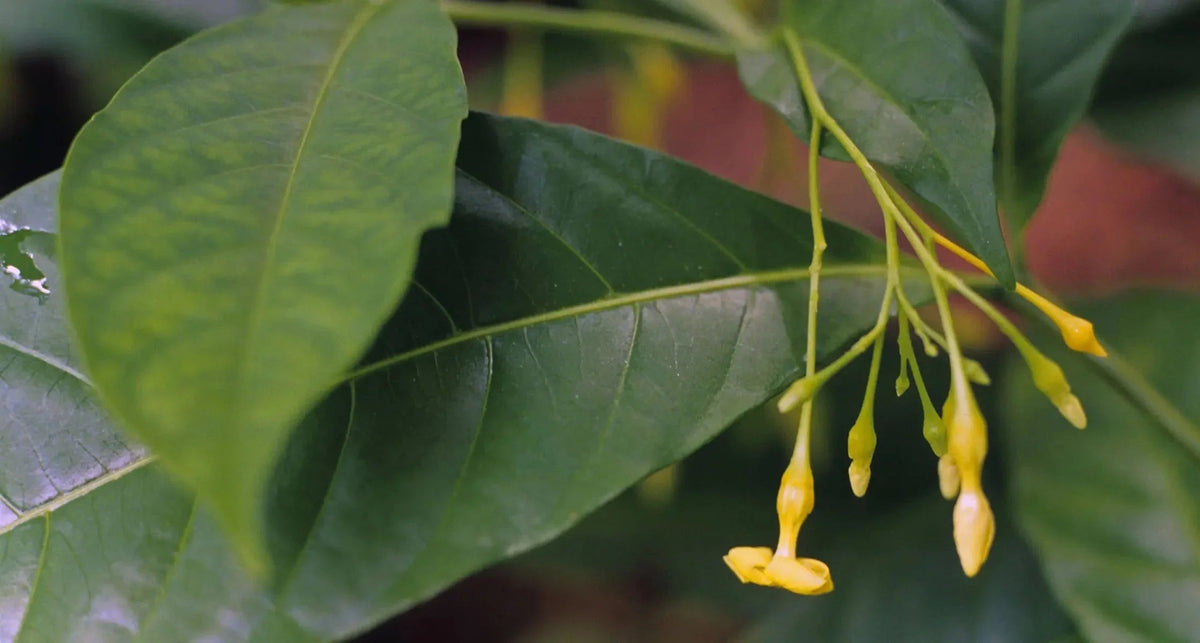
Botany nerd level, but understandable: T. iboga is an evergreen shrub/small tree from the Apocynaceae family. It's native to Gabon, the Congo region, and Angola – in other words, humid tropics. This isn't your average balcony aloe. powo.science.kew.org
How do iboga, ibogaine, and noribogaine differ in origin, chemistry, and effect – and why is this distinction important?
- Iboga = raw plant/root bark, complex alkaloid mix .
- Ibogaine = a major alkaloid (often the focus of research/media).
- Noribogaine = metabolite (breakdown/conversion product) that is said to have a longer spectrum of effects.
Why is this important? Because the effects, duration, and risks are not identical between a "plant product" and an "isolated active ingredient." Saying "I've heard of iboga" without specifying is like saying "I drink coffee"—when you actually mean a four-shot ristretto on an empty stomach.
What subjective effects do users report with Iboga – from alertness to visions – and how can these be objectively assessed?
Reports often mention:
- Alert clarity , intense introspection , "film reels" of the biography,
- long duration (hours to overnight),
- low to no “recreational” suitability (this is not a “chill” evening).
Context: There are strong expectation effects, and set and setting play a huge role. Furthermore, what is said is not automatically evidence-based . Solid statements require controlled data – not just anecdotal evidence.
What mechanisms of action are being discussed (high level), and what could make noribogaine permanently different from ibogaine?
In simplified terms: The discussion revolves around polypharmacological effects (multiple receptor systems) and downstream changes in the reward network. Noribogaine is thought to have a longer- lasting effect associated with craving reduction – this is a hypothesis, not a magic bullet. Details are the subject of ongoing research; definitive statements like "this is how it always works" would be irresponsible.

Which health risks are best documented (e.g., QT prolongation, arrhythmias, liver/electrolytes)?
This is the point that nobody likes to talk about – but it must be said :
- Cardiac risks: Cases of QT prolongation and torsades de pointes (a dangerous arrhythmia) have been reported in the literature, in some cases with fatal outcomes. A case of cardiac arrest following ibogaine administration was also described again in 2024.
- Contextual factors: electrolyte imbalances , medications with QT effect , pre-existing conditions, dehydration – all risk boosters.
- Key takeaway: “Natural” ≠ “harmless”. The risk is real and medically documented , not forum drama.
Which contraindications are considered critical (heart disease, pre-existing conditions, medication lists)?
- Cardiac: known heart disease, familial QT problems.
- Medication: Drugs that can themselves prolong the QT interval (keyword: certain antidepressants, antipsychotics, antiarrhythmics).
-
Substances: stimulants, dehydration (electrolytes), mixed consumption in general.
This is not a complete list – it only shows that the issue is medically serious and incompatible with DIY experiments.
Which interactions with medications or substances are particularly problematic – and why?
Add-ons that increase heart risk are dangerous:
- QT-active drugs + ibogaine = increased risk .
- Dehydration/vomiting → potassium/magnesium decrease → QT increase .
-
Stimulants /high stress → increased pulse , more prone to irregular heartbeat .
Mechanistically, much is plausible; clinically, it is primarily the cardiac complications that are documented.
What is Bwiti – and what role does Iboga historically play in Gabon, Cameroon and the Republic of Congo?
Bwiti is a spiritual practice/tradition in Gabon and neighboring regions.
- Initiation rites , singing, dancing, drumming, nighttime ceremonies.
- Iboga is used ritually – embedded in community , rules , roles (e.g. N'ganga – ritual leadership).
Context matters: It's not a "party". It's culture .
What cultural misunderstandings are circulating online – and how can one recognize respectful, context-sensitive representations?
Red Flags:
- “Tourist mysticism” without local cultural voices.
- Blanket promises ("one weekend = new life").
- Hiding risks and rules .
Sources that show local perspectives , clearly explain terms, and do not gloss over historical developments are better.
What does the evidence say about iboga/ibogaine in cases of addiction – where are the opportunities and limitations?
- Evidence of reduced withdrawal symptoms/craving (especially opioids) – in reviews, observational studies and smaller studies.
- At the same time : reports of serious side effects, including deaths; data are heterogeneous.
- Translation into practice : If at all, then clinical with screening/monitoring – not DIY.
What safety standards do clinical settings typically require (screening, monitoring) – and why are they so strict?
Because the risk is cardiac :
- Review ECG/QT check , electrolytes , and medication list .
-
Monitoring (pulse oximetry, ECG), medical supervision , emergency protocols.
That sounds "clinical"—and it is. That's precisely why it's not suitable for self-experimentation.
Is Iboga legal in Germany – and how can I reliably verify this (BtMG vs. NpSG, wording of the annexes)?
Here's how you always proceed:
- Open laws on the internet → BtMG / NpSG ; check attachments (individual or group registration).
- Search the Federal Law Gazette (BGBl.) → Amendments/Regulations + Entry into force .
- Secondary sources (blogs/lists) should only be read after the primary source has been found , never as primary evidence.
Online sources sometimes state "unregulated in Germany" – while this may be true for certain individual substances as of today, it is not an official finding . Only the wording of the law is legally binding.


How do I find official information (Federal Law Gazette, "Laws on the Internet") and correctly interpret "promulgation" vs. "entry into force"?
- Promulgation = publication in the Federal Law Gazette (where it is finalized).
- Entry into force = from when it applies (stated in the text ).
- Laws-on-the-Internet shows the consolidated status – practical, but the Federal Law Gazette (BGBl) remains the source of truth .
Why does purchasing abroad not protect against German law – and what applies to shipping, transit and travel?
- National law applies at the place of residence/upon import.
- Customs is allowed to inspect shipments, conduct laboratory analyses, and secure evidence (payment flows, etc.).
- Transit/Travel : Different countries = different risks. "Legal abroad" is no guarantee of safety . (You often see this with other substances – it rarely ends well.)
How can the legal situation regarding iboga/ibogaine be roughly assessed in EU neighboring countries, the UK and the USA – and why do these countries differ so greatly?
- USA: Ibogaine is Schedule I (nationwide) – very restrictive.
- EU/others: A patchwork – some countries regulate strictly, others not at all or via medical law.
- Lists and blogs claim to offer an overview; always verify using primary sources from the respective country.
Which sources are suitable for international comparisons – and how can I avoid misinformation from forums/shop blogs?
- Official legal portals of the federal states, parliament/ministry websites , state gazettes .
- Peer-reviewed reviews for medical/safety issues.
- Stay away from "legal high" advertising guides as a "source". They are incentive-driven.
What is the status of species conservation, wild populations and cultivation of Tabernanthe iboga – and why is overuse being discussed?
- T. iboga is native to Central Africa, humid tropics – growing wild. Kew data indicate a wide distribution.
- The IUCN is often cited as Least Concern – nevertheless, communities/NGOs warn against overexploitation and unsustainable harvesting. "LC" does not mean "infinite".
What ethical questions arise (benefit sharing, fairness towards communities of origin, cultural appropriation)?
- Who owns the knowledge?
- Who benefits financially?
-
Are rituals/practices presented respectfully or marketed as an "experience"?
When you talk about Iboga, you automatically talk about ethics – otherwise you miss the point.
What are the key "no-gos" from a safety and evidence perspective (self-experimentation, mixed use, lack of screening)?
- No self-experimentation.
- No mixing of substances (including alcohol/medication).
-
No "it'll be alright".
This isn't stuffy, this is reality . The cardiac risks are documented – period.
What legal, low-risk alternatives exist for goals such as clarity, relaxation, or reflection (breathwork, mindfulness, therapy formats)?
If your goal is clarity/relaxation , you may not need a substance:
- Breathing exercises (prolonged exhalation, box breathing) → reduce stress, increase focus.
- Mindfulness/meditation (10–15 min/day) → Distance from thought loops.
- Sleep hygiene & daylight → more energy, less irritability.
-
Movement/Walks → Mood improves, head quiets down.
Everyday tools are not spectacular – but reliable , legal, and low-risk.
What myths about iboga are particularly widespread – and how can you debunk them with just a few checks?
- "Natural = safe" → False. Natural substances can be extremely potent.
- "A weekend cures everything" → Unrealistic and not medically supported.
- "Legal abroad = okay in Germany" → No. Check primary sources .
- “All stories are true” → Pay attention to peer review rather than forum chains.
How do I document my source check (permalinks, date, screenshots) so that I can substantiate claims later?
- Save link + permalink
- Note the date/time ,
- Save the relevant section as a screenshot (Federal Law Gazette page, wording of the law).
This is how you separate fact from memory – and don't have to rely on "I once read something about it".
Why is “Iboga ≠ Ibogaine ≠ Noribogaine” more than just splitting hairs – and what are the practical consequences of this confusion?
Because dosage, duration, risks, and legal aspects can vary depending on the substance/matrix . Mixing these factors together is like planning on sand – and will lead to stumbling over false assumptions. Period.
Why is the comparison "like LSD/psilocybin" hardly useful – and what differences are crucial for user decisions?
Because the effects , duration , risk , and physical strain are different. Comparison makes the mind comfortable, but it obscures reality. Better: think in your own category – with caution and respect.
Which watch points (Federal Law Gazette, legal portals, systematic reviews) are truly relevant – and how do I set up alerts effectively?
- Federal Law Gazette (Promulgation),
- Laws on the Internet (consolidated text, BtMG/NpSG),
- Parliamentary/Ministry websites (drafts, justifications),
-
PubMed/Reviews (safety, efficacy).
Set up a bookmark and calendar entry (monthly check) – 3 minutes, lots of peace of mind.
How do I distinguish between "new" and "valid" – and when is waiting wiser than acting?
- New = buzz, social posts, podcasts.
-
Valid = primary source, peer review, official text.
If unclear: wait , check again, prioritize safety .
FAQ about Iboga – everything answered in one sentence
Is iboga a plant, an extract, or a single active ingredient?
Iboga is the plant (T. iboga); alkaloids such as ibogaine/noribogaine are derived from it – not the same thing.
Is Iboga the same as Ibogaine or Noribogaine?
No; Iboga = plant matrix, Ibogaines/Noribogaines = specific alkaloids with their own profile.
Which risks are best documented – specifically for the heart?
QT prolongation and Torsade de pointes have been documented; isolated deaths have been described.
Is iboga legal in Germany, and where will I see changes first?
Always check the status in the Federal Law Gazette (BGBl) and laws on the internet (BtMG/NpSG/Annexes); blogs are not official documents.
Are there any applications with scientific backing – and what does that mean for safety?
There is evidence of benefit in addiction, but the safety situation is critical – clinical setting rather than DIY.
Mini-service for your reality check: How to stay well-informed (without a law degree)
- Storage : Federal Law Gazette, Laws on the Internet (BtMG/NpSG), PubMed search “ibogaine review”.
- Monthly ping : 10 minutes in the calendar.
- Small filter : If there is no legal reference (Federal Law Gazette/Section/Annex), it is not a right – just an assertion.


Where Happyflower.io fits into all of this
We're a cannabis shop , not a legal authority. Our job: to explain things clearly , debunk misleading hype, and provide you with reliable sources . If you want products that are legal and easily integrated into your daily life, you'll find inspiration with us – no miracle claims, no "one weekend and everything will change" promises. This is a mature topic . We treat it as such.




Share:
THC for sleep problems – Natural help for a restful sleep
The effects of legal highs: What do "legal highs" really do – and what is important?