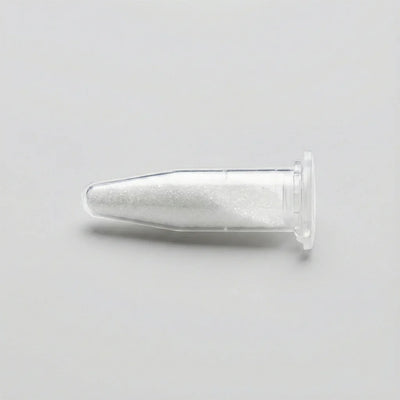
Psychoactive substances have been caught in the crossfire of scientific interest, societal debate, and government regulation for decades. Drug policy in Germany has changed noticeably in recent years: While cannabis has been partially legalized and legal cannabinoids such as CBD, HHC, and PHC have gained importance, legislators are simultaneously reacting much more strictly to substances whose risks are difficult to assess. NB-DMT is one of these substances.
The ban marks a point where research, the scene, and politics intersect. Many people interested in psychoactive substances are now asking: What does this ban actually mean? Why is one substance banned while others are regulated, approved, or medically researched? How do NB-DMT and related psychedelic tryptamines differ biochemically from cannabinoids like CBD or HHC? And what social and health-related reasons led to the decision to ban them?
This article examines the ban on NB-DMT from scientific, legal, and societal perspectives. It also explains why legal cannabinoids are regulated differently, the role of safety standards, and why consumers in Germany can now find reliable, tested products in the areas of CBD , HHC , edibles , vapes , and modern smartshop items, while psychedelic designer tryptamines like NB-DMT are subject to the Narcotics Act.
The following text is deliberately fact-based, journalistic, and written without advertising. It aims to provide guidance in a landscape where policy on substance is in flux.
Key Takeaways
1. NB-DMT has been completely banned since it was classified as a narcotic.
The NB-DMT ban covers possession, acquisition and production, and creates clear legal limits for consumers.
2. The substance was regulated because its effects and risks have hardly been scientifically researched.
A lack of data on toxicity, dosage and long-term effects led to NB-DMT being classified as an unsafe new psychoactive substance.
3. NB-DMT differs significantly biochemically from classic psychedelics.
As a synthetic designer tryptamine, it has an unpredictable effect profile and no established pharmacological basis.
4. The greatest risks lie in purity, dosage, and unclear psychoactive effects.
Without laboratory analyses and clinical research, the health effects of NB-DMT remain largely undefined.
5. The ban is not related to the partial liberalization of cannabis.
While cannabis is regulated, new psychedelic substances such as NB-DMT fall under strict control mechanisms.
6. Legal cannabinoids such as CBD, HHC or PHC have a significantly better data, safety and legal situation.
They rely on verified laboratory analyses, fixed active ingredient contents, and transparent quality standards.
7. The NB-DMT ban increases the focus on regulated, legal substances.
Consumers are increasingly turning to tested cannabinoids, edibles, vapes and smartshop products that are clearly defined by law.
8. For consumers, the ban provides more legal and health guidance.
NB-DMT remains banned, while regulated cannabinoids remain legally available and are easier to assess.


- 1. Key Takeaways
- 2. NB-DMT: Chemistry, effects and background of the ban
- 3. What is NB-DMT?
- 4. Why was NB-DMT banned?
- 5. Differences to classic psychedelics
- 6. Legal situation: What does the ban mean in concrete terms?
- 7. NB-DMT is a narcotic.
- 8. No medical use, no research exemption
- 9. Impact on consumers:
- 10. Risks and health uncertainties
- 11. Lack of data
- 12. Set, Setting and Psychosis Risk
- 13. Why are cannabinoids legal – but NB-DMT is not?
- 14. A fundamental difference: Receptor systems
- 15. Assessed safety
- 16. Research situation
- 17. Controllability
- 18. Consumer protection
- 19. How does the NB-DMT ban change the scene?
- 20. Relocation underground
- 21. Change in the discussion
- 22. Focus on legal substances
- 23. A comparison of legal cannabinoids: Classification without advertising
- 24. CBD
- 25. HHC, PHC and 10-OH-HHC
- 26. Edibles and Vapes
- 27. Smartshop
- 28. Frequently asked questions (FAQs)
NB-DMT: Chemistry, effects and background of the ban
What is NB-DMT?
NB-DMT (N-benzyl-dimethyltryptamine) belongs structurally to the large group of tryptamine derivatives. Tryptamines are a class of substances found in the human body as well as in plants and fungi. The best-known classic tryptamine is DMT (N,N-dimethyltryptamine), which has a long history in traditional ayahuasca-like preparations.
NB-DMT differs from classical tryptamines by an additional N-benzyl group on the molecule, which fundamentally alters its pharmacological profile. This modification results in altered lipophilicity, potentially different receptor binding, and a different metabolic stability. While classical tryptamines often have only a short duration of action, N-substituted variants can remain active for significantly longer.
The scientific data on NB-DMT is very limited. There are no clinically controlled studies, no reliable pharmacokinetic analysis, and hardly any validated data on risks or long-term effects. This uncertainty plays a crucial role in the legal assessment.

Why was NB-DMT banned?
NB-DMT was observed in Germany as a new psychoactive substance (NPS) that circulated primarily online. New psychoactive substances emerge when chemically modified versions of known active ingredients are sold as supposedly "legal alternatives".
In such cases, the legislator often reacts according to a pattern:
- If a substance is poorly researched ,
- potentially psychoactive
- health risks are not assessable ,
- and it has no medical application ,
It is frequently included in the narcotics law.
In the case of NB-DMT, the primary concern was therefore precautionary. The state restrictively assesses substances with a high risk, lack of medical relevance, and widespread distribution. The ban is intended to prevent an untested substance from becoming widely available.
Differences from classic psychedelics
DMT, psilocybin, and LSD are among the best-known serotonergic psychedelics. Thousands of pages of scientific literature, historical contexts of use, pharmacological models, and even controlled clinical trials now exist on them.
NB-DMT, on the other hand, is an "unknown tryptamine." The few user reports describe sometimes more intense effects, sometimes stronger side effects, and sometimes atypical reactions compared to classic psychedelics. This very unpredictability was the decisive reason for regulating it.
Legal situation: What does the ban mean in concrete terms?
NB-DMT is a narcotic.
With its inclusion in the Narcotics Act (BtMG), NB-DMT is now treated legally similarly to classic, non-medicinal psychedelics. Possession, acquisition, trafficking, production, import, and distribution are all punishable offenses. Consumers who previously assumed it was a legal gray area must now be aware that even the smallest quantities can be criminally relevant.
No medical use, no research exemption
For substances like psilocybin, there are now exceptions for research and clinical trials. For NB-DMT, no such applications exist, no approved research project is in place, and no scientifically proven therapeutic potential is apparent.
This means there is no basis for a medical exemption.
Impact on consumers:
Those who have consumed NB-DMT will not face any retroactive measures, but any future use of the substance is a criminal offense. The ban is not primarily intended to criminalize users, but rather to reduce the availability of an untested substance.
Risks and health uncertainties
Lack of data
The greatest risk of NB-DMT is the complete uncertainty. While psychedelic research today is based on solid data regarding receptor binding, dosage, and side effects, NB-DMT has hardly been studied scientifically.
That means:
- unclear toxicity
- Possible interactions with serotonin receptors, but without defined effect profiles.
- potential risks to the cardiovascular system
- unpredictable psychoactive effects
- unclear metabolites and degradation products
In addition, there is the uncertainty regarding purity and impurities, which is generally a problem with synthetic designer tryptamines.
Set, setting and psychosis risk
Although NB-DMT is not fully understood pharmacologically, its structural relationship to tryptamines suggests serotonergic activity. Serotonergic psychedelics can trigger acute anxiety, panic attacks, or psychotic episodes in individuals with a history of mental health issues.
This risk increases with substances that have an unclear effect profile.

Why are cannabinoids legal – but NB-DMT is not?
A fundamental difference: receptor systems
Cannabinoids primarily interact with the endocannabinoid system (CB1/CB2 receptors). This system is naturally occurring in the body, well-researched, and regulates numerous physiological processes such as pain, appetite, and relaxation.
Tryptamines like NB-DMT, on the other hand, act on the serotonergic system (5-HT receptors), which is deeply involved in perception, consciousness, and mood. Changes there can be much more drastic and unpredictable.
Rated safety
Legal cannabinoids such as CBD , HHC , PHC , 10-OH-HHC , edibles , and vapes are subject to strict requirements. Products must undergo laboratory analysis, demonstrate purity, and must not exceed illegal THC levels.
These standards differ fundamentally from the uncontrolled production of synthetic tryptamines.
Research situation
There are over 3000 studies on CBD, over 20,000 on THC, and several decades of research on the endocannabinoid system.
The following exist regarding NB-DMT:
– no clinical data
– no long-term toxicological studies
– no medical applications
This leads to widely differing legal assessments.
Controllability
Cannabinoids are clearly identifiable analytically, relatively well-defined toxicologically, and stable in products. NB-DMT, on the other hand, can occur in various forms, is chemically unstable, and has an unknown risk profile.
Consumer protection
Legal cannabinoids are available because they are regulated. Psychoactive tryptamines are banned because they cannot be regulated.
How does the NB-DMT ban change the scene?
Relocation underground
Bans rarely lead to complete disappearance, but rather to a shift in behavior. This reduces transparency, makes purity less certain, and increases risks. For precisely this reason, tested, legal substances are an important counter-model to the uncontrolled NPS scene.
Change in the discussion
Psychedelics are currently being intensively researched worldwide – but designer tryptamines like NB-DMT are outside this research. The ban could lead to a clearer distinction in the discussion between classic psychedelics (with research potential) and synthetic alternatives (with unclear risks).
Focus on legal substances
Many consumers are now turning to regulated, tested cannabinoid products. The NB-DMT ban is accelerating this trend.

A comparison of legal cannabinoids: An overview without advertising
CBD
Cannabidiol is non-intoxicating, is being medically researched, and is considered relatively well-tolerated. People can learn about it objectively. How to buy CBD without getting into legal gray areas.
HHC, PHC and 10-OH-HHC
These substances have psychoactive effects, but are regulated in Germany, not banned, and must undergo laboratory analysis. Those seeking information can find verified sources and legally authorized providers, such as at [website/company name]. Buy HHC .
Edibles and Vapes
Edible cannabinoid products and modern inhalation methods are legal and may only contain defined levels of active ingredients. The legal situation differs significantly from that of psychedelic NPS. More background information can be found on websites like Edibles and Vapes .


Smartshop
The term refers to legal, tested products – botanical extracts, non-psychoactive substances, and accessories. Information about these products is publicly available, regulated, and transparent, as is the case in smart shops .
The ban on NB-DMT exemplifies how differently psychoactive substances are assessed. While classic psychedelics are increasingly being scientifically investigated and legal cannabinoids are established, new designer tryptamines fall into a zone of uncertainty: barely researched, potentially risky, and difficult to regulate.
The ban primarily protects against a substance whose effects are unpredictable and whose health risks are incalculable. At the same time, it highlights the differences to legal, regulated cannabinoids: research, purity, laboratory analyses, and defined active ingredient levels are key factors that determine legal classification.
For consumers, the ban means more clarity: While NB-DMT is subject to the Narcotics Act, cannabinoids such as CBD, HHC, PHC or edibles remain legally available – tested, regulated and traceable.
This creates a market that focuses on safety rather than risky gray areas.
1. Is NB-DMT now completely illegal?
Yes. NB-DMT is a controlled substance. Possession, acquisition, production, and trafficking are criminal offenses.
2. Why was NB-DMT banned while cannabinoids are legal?
NB-DMT is poorly researched, potentially risky, and has no medical applications. Cannabinoids, on the other hand, are well-researched scientifically and legally regulated.
3. Does the ban have anything to do with the partial liberalization of cannabis?
No. The regulation of cannabis and the control of new psychoactive substances follow separate policy lines.
4. Are legal cannabinoids safe alternatives?
They are subject to strict laboratory and purity requirements. However, safety always depends on responsible handling.






Share:
Why was ETMC banned? Legal background and current legislation.
HHC vs THC: Effects, differences, risks & modern applications