
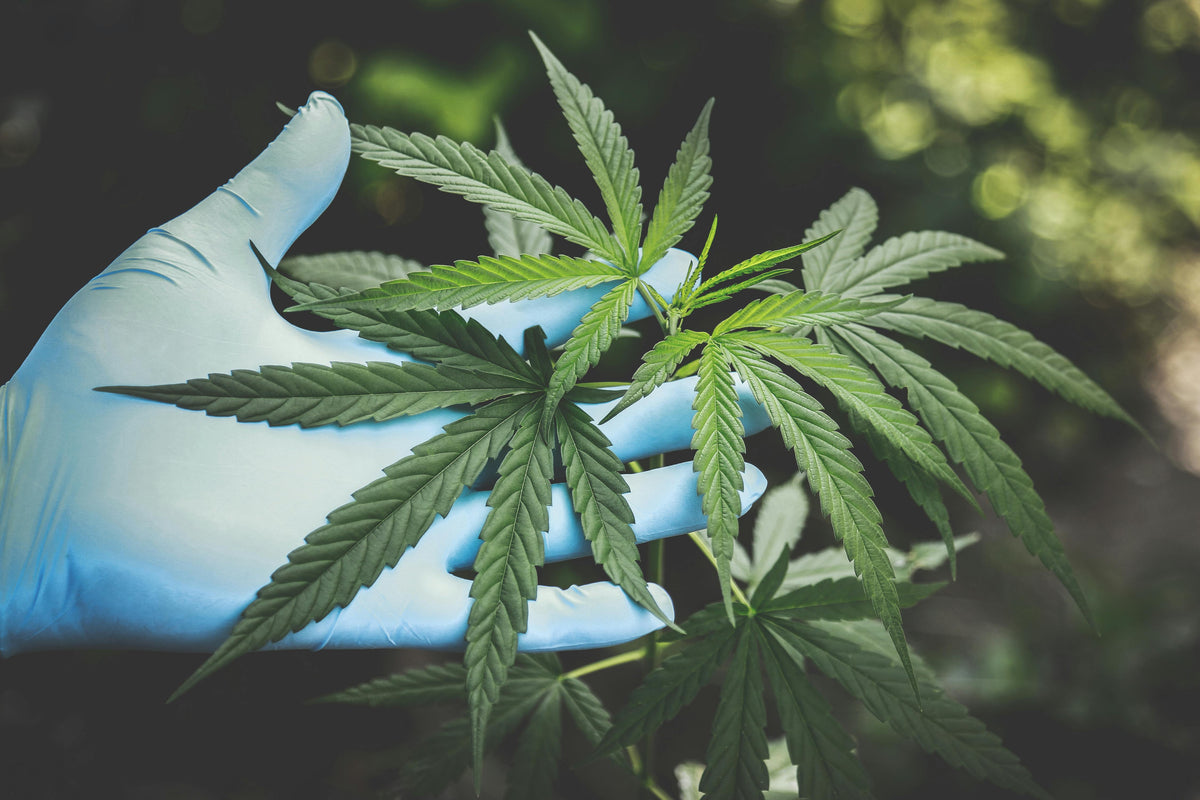
Few cannabinoid comparisons are currently generating as much discussion as HHC vs. THC . Since legalization in Germany, the growing popularity of hemp products, and the international availability of novel cannabinoids, consumers face a situation that simultaneously creates opportunities and uncertainties. THC has been known for decades, scientifically described, and widely discussed in society. HHC, on the other hand, is a much newer substance in the public consciousness and is often associated with half-truths, misunderstandings, and contradictory statements. Many users believe HHC is a milder, "softened" version of THC. Others assume that the effects are identical. Still others see HHC as a completely independent cannabinoid that has little to do with THC.
The truth is more complex, but clearly explainable. While HHC and THC have a similar structure, subtle chemical differences lead to altered binding mechanisms at the receptors of the endocannabinoid system. These differences influence intensity, duration, side effects, metabolism pathways, risks, and legal classification. Therefore, if you want to understand how HHC and THC truly work, what effects are realistic, and how to distinguish between the two substances, an objective look at biochemistry, pharmacology, and user reports will help.
This article examines the scientifically sound comparison of HHC vs. THC , free from promotional language, yet accessible and engaging. It operates on the premise that informed consumers make safer choices – whether regarding flowers, edibles, vapes, or smartshop products. At the same time, it reveals what to look for when buying, how HappyFlower utilizes lab analyses, purity, and transparency, and which factors determine the quality of cannabinoids.
Key Takeaways
-
HHC and THC are structurally similar, but have different effects.
HHC is hydrogenated and binds less strongly to CB1 receptors, which is why its effects are often described as softer and more variable. -
THC is well-researched scientifically – HHC is not.
THC has decades of data available, while HHC has only limited research, which is why assessments should be made more cautiously. -
Psychoactivity differs in intensity and predictability.
THC usually has a stronger and more consistent effect, while HHC can vary greatly depending on the isomer and product form. -
The metabolic pathways in edibles are different.
THC is metabolized to 11-OH-THC (strongly psychoactive), HHC and others to 10-OH-HHC, whose effects are less researched. -
Legally, THC and HHC are embedded differently.
THC is legal and regulated, HHC is legal but not stably regulated and is already restricted in some EU countries. -
HHC products vary more in quality and potency.
Differences in manufacturing processes and isomers make laboratory analyses essential. -
THC flowers are natural, HHC flowers are not.
HHC is only present in trace amounts in the plant; enriched flowers are produced using technical means. -
Dosage: THC is more predictable, HHC requires a slow approach.
Due to the variability, a low starting point is recommended for HHC. -
The risks are similar, but less documented for HHC.
Anxiety, rapid heartbeat, or fatigue may occur; scientific clarity is lacking regarding HHC. -
Quality matters.
Purity, terpene profile, cannabinoid profile and lab reports are particularly important for HHC; regulated standards help with THC.


- 1. Key Takeaways
- 2. What exactly is the difference between HHC and THC? A chemical introduction
- 3. Effects on the endocannabinoid system: How HHC and THC work in your body
- 4. Effect profile: How do HHC and THC feel subjectively?
- 5. Legal situation: Why THC is strictly regulated and HHC remains in a gray area
- 6. Applications and forms of consumption: Vapes, flowers, edibles
- 7. Dosage: Why HHC is harder to assess
- 8. Risks and side effects
- 9. What does this mean for your purchase? What you should pay attention to.
- 10. Frequently asked questions (FAQs)
What exactly is the difference between HHC and THC? A chemical introduction
HHC (hexahydrocannabinol) and THC (tetrahydrocannabinol) are structurally related. Both belong to the so-called "tricyclic cannabinoids" and primarily act via the CB1 and CB2 receptors of the endocannabinoid system. The crucial difference lies in their hydrogen content:
- THC has a double bond on the ring.
- HHC is hydrogenated , meaning it is chemically "saturated". The double bond is missing; instead, hydrogen atoms are attached.
This change is subtle, but relevant. The loss of the double bond makes HHC more stable against oxidation and therefore slower in its degradation. However, this does not automatically affect the intensity of its effect, but it does influence pharmacological details such as its half-life and activation behavior in the body.
Another point to consider: HHC exists in different isomers (e.g., 9R and 9S), each with varying potency. Many industrial HHC products contain a mixture of these variants, making the effects more variable compared to pure THC.

Effects on the endocannabinoid system: How HHC and THC work in your body
THC binds strongly to the CB1 receptor , which is primarily located in the brain. This produces the well-known psychoactive effects: altered perception, euphoria, impaired coordination, or increased appetite. The psychoactive effects of THC are well-documented scientifically and depend on factors such as:
- Cannabinoid profile of the strain
- Terpene profile (e.g., myrcene, limonene, caryophyllene)
- Type of recording
- Consumer tolerance
HHC also binds to the CB1 receptor, but somewhat less strongly and less uniformly. Many users describe the effect as "softer," "rounder," and less "cerebral." However, this does not mean that HHC is inherently mild. It simply means that HHC is less reliably capable of producing a strong psychoactive effect and that higher doses may be required.
Biochemically relevant is the fact that HHC decarboxylates more slowly and forms different intermediate products in its metabolism. THC is primarily broken down via the active metabolite 11-OH-THC , which is more psychoactive than THC itself. This is why classic edibles have such an intense effect. HHC, on the other hand, forms 10-OH-HHC , which is also psychoactive, but less well-researched.
Effect profile: How do HHC and THC feel subjectively?
Many consumer reports show recurring patterns:
THC :
- intense, clear psychoactive effect
- often “head high”
- increased appetite
- enhanced sensory perception
- more intense body awareness
- possible risk of anxiety or rapid heartbeat
HHC :
- Overall less predictable
- A more "body-heavy" effect
- softer psychoactive influence
- often a slight increase in mood and relaxation
- Lower likelihood of severe anxiety (subjectively reported, not guaranteed)
These differences are not objectively measurable, but they consistently appear in anecdotal reports. There are indications that the lower receptor binding of HHC results in less of an "overwhelming" effect. Nevertheless, HHC can still have a strong effect – especially in vapes, which often contain high concentrations.

Legal situation: Why THC is strictly regulated and HHC remains in a gray area
Since its legalization, THC has been clearly regulated in Germany. It is permitted, but subject to defined distribution structures, THC limits, and protective measures. Its handling is unambiguous under the law.
HHC, on the other hand, remains in a legal gray area. It is generally not listed in the Narcotics Act , but its classification varies depending on the manufacturing method or product type. Some EU countries have already regulated or banned HHC. In Germany, its classification can change at any time.
The crucial point is:
Therefore, transparency in manufacturing processes, purity, and laboratory data is particularly important.
Applications and forms of consumption: Vapes, flowers, edibles
THC
It is frequently consumed as:
- classic flowers
- Extracts
- Edibles
- Vapes
- drinks
THC flowers contain terpenes that significantly influence their effects and aroma. THC edibles produce a particularly strong effect due to the presence of 11-OH-THC.
HHC
It occurs predominantly as:
- Vapes
- Edibles
- occasional flowers (enriched with HHC)
Since HHC only occurs in trace amounts in natural plants, HHC flowers usually need to be treated afterwards, which can greatly vary the quality.


Dosage: Why HHC is harder to assess
A realistic dosage is easier to research with THC. Users usually know intuitively how a strain affects them. With HHC, however, the variability is higher because:
- Isomer ratios vary
- Manufacturing processes differ
- Terpenes are sometimes added artificially.
- no natural "variety profile" exists
One cautious approach is:
- THC: known effects, dosage according to experience
- HHC: start low, increase slowly

Risks and side effects
THC
Scientifically documented side effects:
- Anxiety
- Short-term memory impairment
- increased heart rate
- dry mouth
- Coordination difficulties
HHC
The risks are similar to those of THC, although the data is less clear. Subjectively, users report less anxiety but more fatigue. Scientific documentation is limited, so caution remains advisable.
What does this mean for your purchase? What you should pay attention to.
Since HHC products are not uniformly regulated, quality control is crucial. Transparent retailers focus on:
- Lab reports
- verifiable purity
- clear cannabinoid profiles
- no solvent residues
- realistic information about potency
HappyFlower provides laboratory analyses and purity testing for HHC, edibles, flowers, and vapes. This creates uniform standards and reliable guidance – especially important in a market with many variable manufacturing processes.
If you would like to find out more, you can use internal categories such as:
These sections explain dosage, effect profiles and legal aspects in detail.
HHC vs. THC – this comparison shows how differently two structurally similar cannabinoids can have different effects. THC is better researched, more psychoactive, and legally precisely defined. HHC is more variable, generally described as milder, but scientifically less clear and legally evolving. For responsible consumption, the question isn't so much which cannabinoid is "better," but rather which one suits your situation, tolerance, and expectations. Laboratory analyses, verified quality, and informed use can reduce risks and allow for a more reliable assessment of effects. Whether it's THC, HHC, or modern smartshop products – sound knowledge remains the most important factor for a positive experience.
1. Is HHC psychoactive like THC?
Yes, HHC is psychoactive, but often somewhat milder and more variable than THC.
2. Which has a stronger effect: HHC or THC?
THC generally has a stronger and more consistent effect. However, HHC can be comparably intense at high doses, but its effects are less predictable.
3. Is HHC more legal than THC?
No, they're just regulated differently. THC is legal and clearly defined, while HHC is legal but legally unstable. Changes are possible at any time.
4. Is HHC safer than THC?
There is currently no scientific basis for this. HHC is simply less researched. The risks are similar to those of THC, but less well documented.






Share:
NB-DMT ban: What does this mean for consumers?
Legal Cannabinoids 2026 – A Comprehensive Guide to Effects, Risks and Legal Situation